Loading
Loading
Body Protection Compound 157 · TB-500 · GHK-Cu repair stack
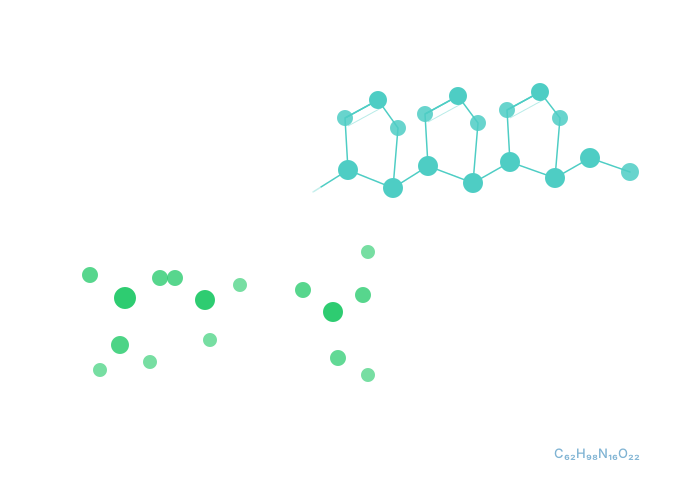
BPC-157 promotes angiogenesis, accelerates fibroblast and endothelial cell migration to injury sites, and modulates the nitric oxide pathway. TB-500 (Thymosin Beta-4) sequesters G-actin to facilitate cell migration and reduce inflammation. GHK-Cu activates tissue-remodelling pathways via TGF-β and stimulates collagen synthesis.
Overview
BPC-157, Thymosin Beta-4 (Tβ4), and GHK-Cu are endogenously derived peptides that have been independently investigated in preclinical research for their roles in tissue repair, angiogenesis, extracellular matrix remodeling, and inflammation-associated cellular signaling. These peptides differ substantially in molecular structure and biological origin: BPC-157 is a stable gastric-derived pentadecapeptide, Thymosin Beta-4 is a ubiquitously expressed actin-binding peptide, and GHK-Cu is a copper-chelating tripeptide involved in redox- and matrix-related pathways. Despite these differences, experimental findings suggest that all three converge on overlapping regulatory processes involved in injury response and tissue remodeling.
In vitro and animal studies have associated BPC-157 with endothelial protection, fibroblast activation, and cytoprotective signaling; Thymosin Beta-4 with cell migration, progenitor cell recruitment, angiogenic signaling, and reduced fibrotic activity; and GHK-Cu with copper-dependent enzymatic activity, extracellular matrix synthesis, antioxidant defense, and gene expression modulation. Collectively, these mechanisms span multiple phases of tissue repair, including early inflammatory control, vascular regeneration, matrix deposition, and structural remodeling.At present, proposed synergistic interactions among BPC-157, Thymosin Beta-4, and GHK-Cu are based on mechanistic complementarity inferred from separate experimental models. No controlled studies have directly examined their combined effects, and all available data remain strictly preclinical and non-clinical, with no human trials evaluating combined exposure.
Compliance
Sold strictly as a research chemical for non-human, in-vitro, and laboratory use
FDA approved compound
Listed as prohibited under WADA anti-doping regulations
Prescription availability in Australia and internationally
In Australia, bpc-157, thymosin beta-4, and ghk-cu peptide has no TGA approval for therapeutic use. It is sold by Capital Peptides strictly as a research chemical for non-human, in-vitro, and laboratory research use only.
Pharmacology
BPC-157 promotes angiogenesis, accelerates fibroblast and endothelial cell migration to injury sites, and modulates the nitric oxide pathway. TB-500 (Thymosin Beta-4) sequesters G-actin to facilitate cell migration and reduce inflammation. GHK-Cu activates tissue-remodelling pathways via TGF-β and stimulates collagen synthesis.
Field Signal
Community & Anecdotal Signal
Community signal is the loudest and most divided of any compound in the catalog. Injury recovery reports, tendons, ligaments, gut healing, are extraordinarily consistent across Reddit, biohacking forums, and anecdotal databases, with users frequently describing results they characterize as dramatic. This community consensus exists in direct tension with the weak formal evidence base (RQS: 23/100), making BPC-157 the clearest example of why PeptideClear tracks anecdotal signal separately from research quality. Oral vs injectable debate is active, many users report equivalent results orally, whi
Anecdotal reports are not clinical evidence. Signal may reflect sourcing quality, dosing variation, and expectation bias.
Support
Available from Capital Peptides
References
For research use only. Capital Peptides products are not approved by the TGA for therapeutic use. By purchasing you confirm you are a licensed research entity or qualified professional.