Loading
Loading
Copper-binding tripeptide · Collagen synthesis · Wound healing
Binds copper ions to facilitate tissue repair; activates TGF-β1-mediated collagen and glycosaminoglycan synthesis; upregulates superoxide dismutase and other antioxidant enzymes; promotes angiogenesis through VEGF signalling.
Overview
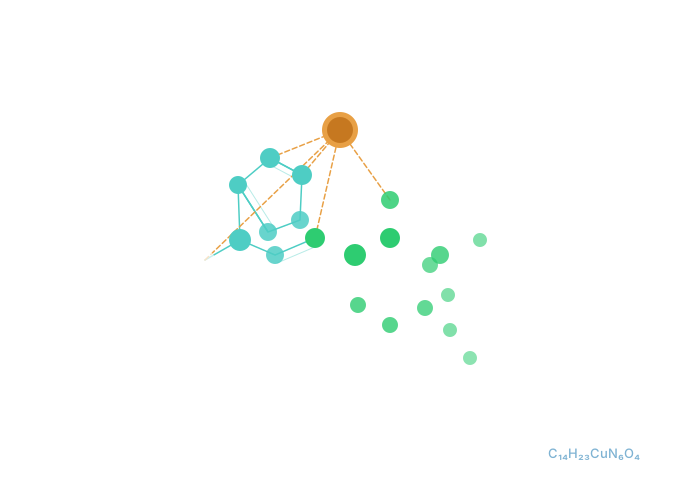
Copper Peptides, particularly GHK-Cu (glycyl-L-histidyl-L-lysine bound to copper), are naturally occurring complexes that have been widely studied in preclinical research for their potential role in cellular signaling and tissue-related processes. First identified in human plasma, GHK has a strong affinity for copper ions, forming GHK-Cu—a biologically active complex that has been explored for its involvement in regenerative and protective mechanisms at the cellular level. Unlike fully synthetic peptides, GHK is considered endogenous, though its broader biological functions continue to be actively investigated.
Across laboratory and animal-based models, GHK-Cu has been examined for its potential influence on processes such as tissue remodeling, inflammation modulation, and cellular repair signaling. Research has explored how this copper-binding peptide may interact with gene expression pathways, including those associated with extracellular matrix production, collagen synthesis, and antioxidant activity. These studies often focus on how GHK-Cu may regulate cellular communication, support structural protein turnover, and influence signaling cascades linked to tissue maintenance.
In addition to its role in regenerative-focused studies, GHK-Cu has also been evaluated for its potential involvement in inflammatory response modulation and oxidative stress regulation in experimental settings. Some preclinical findings suggest that it may influence pathways related to cytokine activity and cellular defense mechanisms, as well as contribute to maintaining balance within stressed or damaged biological systems.
To support consistent experimental analysis, GHK-Cu has been synthesized and stabilized for laboratory use, allowing researchers to more precisely evaluate its behavior under controlled conditions. All findings referenced are derived exclusively from non-clinical studies. There are no established conclusions regarding human safety, pharmacokinetics, dosing, or therapeutic applications, and all observations remain within the scope of ongoing scientific investigation.
Compliance
Sold strictly as a research chemical for non-human, in-vitro, and laboratory use
FDA approved compound
Prescription availability in Australia and internationally
In Australia, copper peptides (ghk-cu expanded study) has no TGA approval for therapeutic use. It is sold by Capital Peptides strictly as a research chemical for non-human, in-vitro, and laboratory research use only.
Pharmacology
Binds copper ions to facilitate tissue repair; activates TGF-β1-mediated collagen and glycosaminoglycan synthesis; upregulates superoxide dismutase and other antioxidant enzymes; promotes angiogenesis through VEGF signalling.
Field Signal
Community & Anecdotal Signal
One of the most enthusiastically discussed peptides in biohacking communities despite thin human RCT evidence, a pattern PeptideClear's RQS framework captures directly. Topical use for skin texture, fine lines, and wound healing generates consistent positive anecdotes. Injectable GHK-Cu reports are more mixed and methodologically harder to evaluate given sourcing variability. Hair loss community (r/tressless and similar) has a significant body of anecdotal discussion, with some users reporting regrowth and others no effect. The gap between community enthusiasm and formal evidence is wider for
Anecdotal reports are not clinical evidence. Signal may reflect sourcing quality, dosing variation, and expectation bias.
Support
Available from Capital Peptides
References
For research use only. Capital Peptides products are not approved by the TGA for therapeutic use. By purchasing you confirm you are a licensed research entity or qualified professional.